

On this page
Your website is usually the first impression a prospective client gets of your business. If it loads slowly, looks dated, or breaks on a phone, you can lose that prospect before they ever see what you do. A redesign is a real investment, so it helps to know when the numbers — not just the aesthetics — say it is time. Here are five signs worth acting on.
1. Your pages take more than three seconds to load
Page speed is a confirmed ranking factor and a major driver of bounce rate. Most visitors abandon a page that takes longer than three seconds to become usable, and every additional second measurably lowers conversions. If your site is built on a bloated theme, unoptimised images, or years of stacked plugins, a rebuild on a lean modern stack is often faster and cheaper than patching the old one.
Before assuming a rebuild, measure. Run the site through a page-speed tool on a mobile connection rather than office broadband, and look at what dominates the load: usually oversized images, a handful of unused scripts and a theme loading assets for features you never enabled. If trimming those gets you under three seconds, you have bought yourself another year. If the framework itself is the ceiling, rebuilding is the honest answer.
2. The mobile experience is an afterthought
More than half of web traffic is mobile, and Google indexes the mobile version of your site first. If buttons are hard to tap, text needs pinching to read, or key sections are hidden on small screens, you are actively turning away the majority of your audience. A responsive, mobile-first layout is now the baseline, not a premium add-on.
Test on a real phone rather than a resized browser window. Check the things people actually do: read the headline, tap the phone number, open the menu, complete the enquiry form one-handed. A site that technically reflows but makes the form painful to complete is still losing the enquiry.
3. Traffic is steady but leads are not
If analytics show consistent visitors but your enquiry form stays quiet, the problem is rarely traffic volume — it is the path from landing page to contact. Unclear messaging, buried calls to action, long forms and missing trust signals all leak conversions. A redesign focused on information architecture and conversion flow usually recovers more revenue than a bigger ad budget would.
Look for the specific leak before redesigning everything. Which page do most visitors land on, and does it state plainly what you do and what to do next? How many fields does the form ask for, and are they all genuinely needed? Are there reviews, case studies or client names anywhere near the point of decision? Cutting a form from nine fields to four is a smaller project than a redesign and sometimes solves the problem outright.
4. You cannot update content without a developer
A modern site should let your team publish a blog post, swap a testimonial or update pricing without touching code. If every small change needs a developer ticket, your content and SEO efforts stall. Moving to a maintainable CMS-backed build gives your team control and keeps the site current.
The cost here is invisible because it shows up as things not done: the case study never published, the outdated price left up for months, the service page that still describes work you stopped offering. Any content strategy depends on your own team being able to publish without friction.
5. The design no longer matches where the business is going
Brands evolve. New services, new audiences and new positioning all outgrow a site that was scoped years ago. When the website undersells what you now do, it creates friction in every sales conversation. A redesign is a chance to realign the site with the business you run today.
A useful test: send your homepage to someone who does not know your business and ask what you sell and who you sell it to. If the answer takes more than a few seconds or comes back wrong, the problem is positioning rather than pixels — and no amount of visual polish will fix it.
Redesign, rebuild, or just iterate?
These are three different projects with very different costs, and they are often confused:
- Iterate — keep the build, fix specific pages, forms, speed and copy. Weeks of work, lowest risk, right when the foundations are sound.
- Redesign — new look, structure and content on the existing platform. Right when the site works technically but no longer represents the business.
- Rebuild — new platform and codebase. Right when performance, security or the ability to make changes is capped by the current stack.
Most businesses that ask for a rebuild need a redesign, and a good number that ask for a redesign need three weeks of iteration. An honest assessment should be willing to recommend the smaller project.
What a redesign must not break
The most expensive redesign mistake is losing search visibility that took years to build. Before launch, make sure the plan covers:
- A full inventory of current URLs, with 301 redirects mapping every retired URL to its closest replacement.
- Page titles, meta descriptions and heading structure carried across, not regenerated from scratch.
- Existing content kept where it already ranks, rather than trimmed for visual tidiness.
- Analytics and conversion tracking reinstalled and verified on the new build.
- Structured data, sitemap and robots.txt regenerated and submitted.
We have seen sites lose most of their organic traffic after a visually excellent relaunch, purely because old URLs began returning 404s. Recovering from that takes months. Getting the redirect map right takes an afternoon.
What it costs and how long it takes
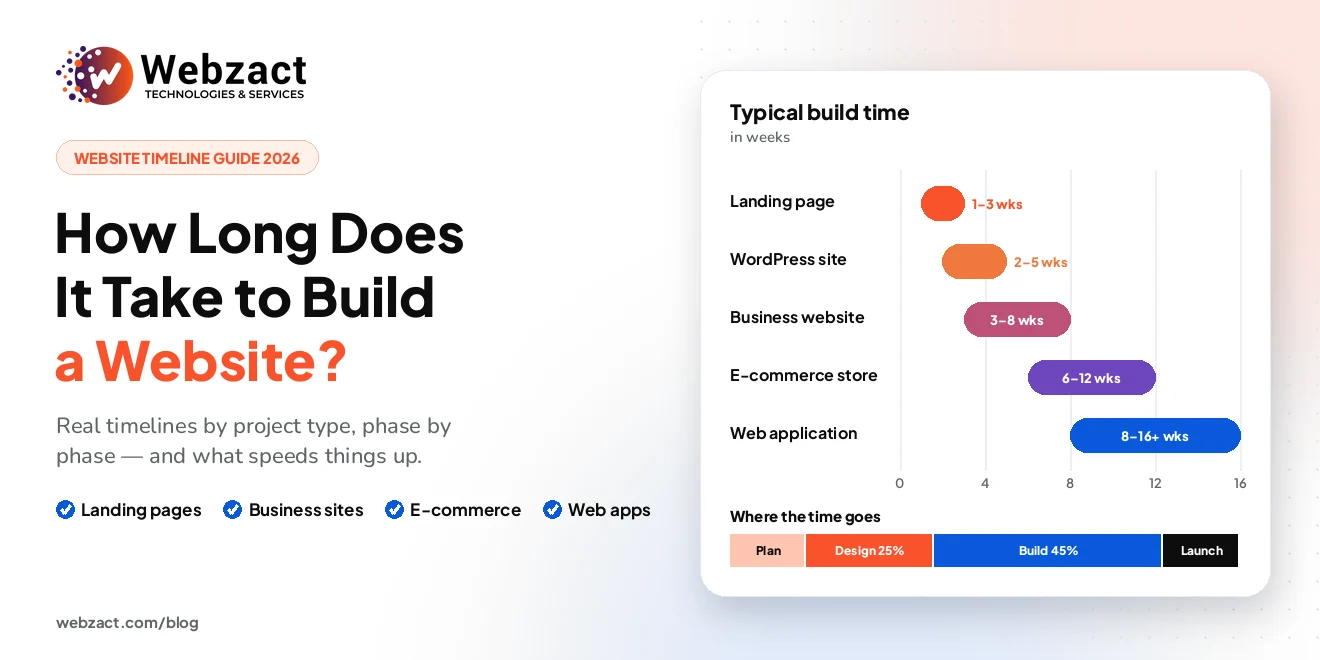
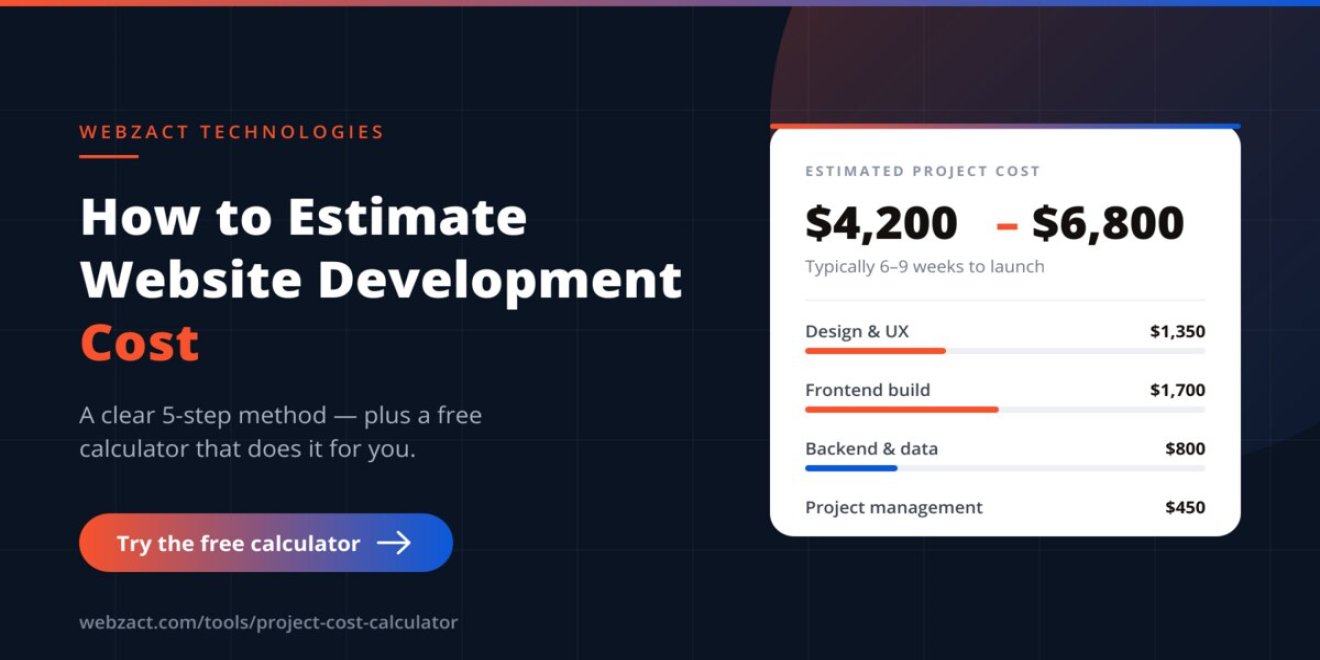
Scope drives both. A focused marketing site is a different project from an e-commerce store with hundreds of products or a platform with user accounts. The variable that most often moves a timeline is not development — it is content: text, photography and product detail. Agreeing who writes what, and by when, in the first week is the single most effective way to keep a project on schedule. Our guide to website costs and realistic build timelines cover both in detail, and the project cost calculator gives an instant estimate for your scope.
How Webzact Technologies can help
Our web design and development team rebuilds business websites on current, scalable frameworks with performance, accessibility and conversion built in from the first sprint. We keep scopes clear and timelines honest, and we stay on after launch for support rather than handing you off. If any of the signs above sound familiar, get in touch for a straightforward assessment of your current site.
Frequently asked questions
How often should a business website be redesigned?
There is no fixed interval. Rather than redesigning on a schedule, watch the indicators: load times, mobile usability, conversion rate and whether the site still describes the business accurately. A well-built site that is maintained and iterated can run for many years; a neglected one can need replacing in two.
Will a redesign hurt our Google rankings?
It can, if URLs change without redirects, content is cut, or metadata is regenerated carelessly. Done properly — with a complete redirect map, content preserved and tracking verified — a redesign usually improves rankings, because speed, structure and mobile experience all get better at once. Insist on seeing the redirect plan before launch.
Can we redesign in stages instead of all at once?
Yes, and it is often the better approach. Rebuilding the highest-value templates first — homepage, service pages, enquiry flow — delivers most of the benefit early and spreads the cost. The main requirement is a shared design system so the staged pages do not drift into looking like two different sites.
What do we need to provide for a redesign project?
Content is the main one: approved copy, images, logos, and details of services and pricing. Beyond that, access to your domain, hosting and analytics, plus a single decision-maker who can sign off. Projects slow down far more often over content and approvals than over development.
Should we redesign or just improve our current site?
If the current build is fast, secure, editable by your team and mobile-friendly, improving specific pages is almost always the better value. A redesign makes sense when the platform itself limits what you can fix, or when the site no longer reflects what the business sells. A reputable agency should tell you which applies rather than defaulting to the larger project.